What are sensory triggers? A complete guide for families traveling with autistic children.
Traveling with an autistic child is an experience full of discoveries — but it can also involve challenging situations, especially when issues arise. sensory triggersThese triggers can turn a peaceful outing into a moment of overwhelm, anxiety, or crisis. 💙
Understanding what they are, how they arise, and how to prevent them is the first step to ensuring more accessible, safe, and welcoming trips for the whole family. In this complete guide, you will learn clearly and practically everything you need to know about them. sensory triggers in autistic people, especially in the context of tourism.
What are sensory triggers?
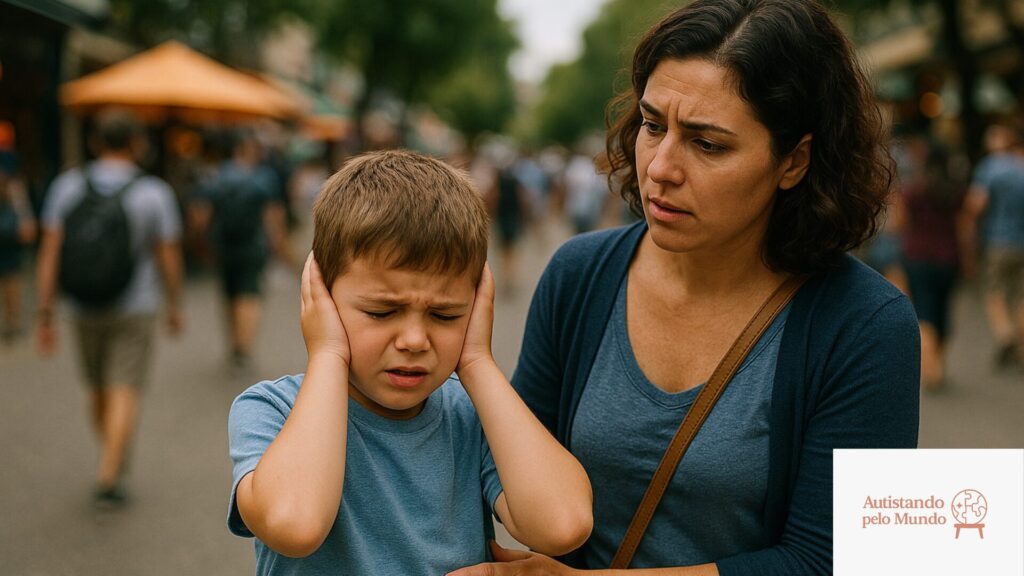
Sensory triggers are stimuli — sounds, lights, smells, textures, movements, or even social behaviors — that can cause intense discomfort, irritability, physical pain, fear, anxiety, or sensory overload in an autistic person.
Autistic individuals may exhibit hypersensitivity (feeling too much) or hyposensitivity (feeling too little), and therefore simple everyday stimuli can be perceived very differently than other people perceive them.
When the stimulus is too strong for that person's sensory system, it becomes a kitten.
Why can travel intensify sensory triggers?
Traveling involves breaking from routine, facing unfamiliar environments, and dealing with unexpected stimuli. For an autistic person—especially children—this can be very challenging.
- New sounds and noises;
- Large crowds;
- Strong smells;
- Different lights;
- Visually overloaded environments;
- Complete change in predictability;
- Too much sensory information.
All of this increases the likelihood of a trigger being activated during walks, in parks, restaurants, airports, or hotels.
Main types of sensory triggers in autistic people
Each person is unique, but some triggers are more common in autism—especially in tourism and sightseeing experiences. Here are the main ones:
1. Auditory triggers 🔊
Among the most frequent. Sounds that usually go unnoticed by other people can be painful for autistic individuals.
- Fireworks;
- Music too loud;
- Large groups talking at the same time;
- Microphones, speakers and loudspeakers;
- The sound of a chair being dragged;
- Hand dryers in public restrooms;
- Airplanes, buses, and subways.
2. Visual triggers 👀
Excessive visual stimuli can quickly lead to overload.
- Flashing or very bright lights;
- Illuminated panels;
- Environments with highly contrasting colors;
- Intense visual movement (parks, shopping malls, airports);
- Crowded and visually disorganized environments.
3. Tactile triggers ✋
The feel of clothing, labels, temperature, or texture can cause significant discomfort.
- New or tight-fitting clothes;
- Sand, grass, or water that is too cold/hot;
- Seat belts or seats that are too hard;
- Food textures;
- Sweat, excessive heat, or humidity.
4. Social Triggers 🤯
Unexpected interactions can generate discomfort, anxiety, or a feeling of loss of control.
- Unfamiliar people talking to the child;
- Expectation of physical contact (hugs, kisses);
- Highly demanding social environments;
- Routine interruptions.
5. Olfactory triggers 👃
Strong smells can be perceived as threatening or unbearable.
- Perfumes;
- Smell of food (fried food, strong spices);
- Public restrooms;
- Buses and airplanes with a more pungent odor;
- Strong air fresheners in shops and hotels.
6. Predictability Triggers (Routine) ⏰
The lack of control over what will happen is as real a trigger as a loud noise.
- Sudden change in routine;
- Activities without prior explanation;
- Delays, long lines or unforeseen events;
- Unfamiliar environments.
How to identify your child's sensory triggers
One of the most important steps to traveling with peace of mind is understanding What are the child's individual triggers?Even though there are common patterns, each autistic person has their own unique sensitivity.
Check before the trip 👀
Pay attention to everyday situations: the supermarket, the shopping mall, the restaurant, street noise, kitchen smells, new clothes.
Record behaviors 📱✍️
Write down or record small reactions:
- hand over ear;
- crying for no apparent reason;
- try to escape the environment;
- sudden agitation;
- Echoing sounds, groaning, or vocalizing loudly;
- Getting annoyed by textures;
- Walking in circles or swinging;
- to become more aggressive or completely quiet.
Talk to the child, if they can communicate 🤍
Some children are able to say what bothers them, while others signal it with gestures, expressions, or behaviors. All of this is communication.
How to prevent sensory triggers while traveling.
While it's not always possible to eliminate all triggers, it is entirely possible. reduce significantly Their impact. Prevention is the key to smoother travel.
1. Anticipate what will happen 💬
Explain the trip in advance using social media stories, photos, or videos of the destination.
2. Create a sensory kit 🌈
- Noise-canceling headphones;
- tactile toys;
- calming scents (if the child accepts them);
- object of comfort;
- tablet with favorite videos.
3. Research venues in advance 🏨🎡
Look for times with less traffic, quiet spaces, and places with welcoming service.
4. Prepare alternatives for sensory escape 🧸
- a secluded corner in the hotel;
- Strategic breaks during the day;
- Headphones always at hand;
- Quiet places close to the attractions (less crowded restrooms, outdoor areas, parking, etc.).
5. Respect the child's limits 💙
It's not necessary to "see everything," "enjoy everything," or follow a perfect itinerary. If the child needs to leave, pause, or change the plan, that's part of truly inclusive tourism.
How to act when a sensory trigger has already occurred.
Even with preparation, triggers can happen — and that's okay. The important thing is knowing how to react calmly, empathetically, and predictably.
1. Prioritize safety.
Comfort the child and remove them from the stimulus that triggered the reaction.
2. Reduce surrounding stimuli.
- Go to a quieter place;
- Lower the lights or cover the light with a piece of clothing;
- Use noise-canceling headphones.
3. Welcome first, speak later.
Avoid reprimands, lengthy questions, or explanations at that moment. First, offer comfort, then converse.
4. Strengthen communication
Use gestures, AAC, cards, or simple phrases like "it's okay," "let's take a break."
5. Resume your routine.
Once the child is back to normal, continue the walk at their pace. No rush. No guilt.
Conclusion: inclusive tourism begins with the sensory experience.
To understand sensory triggers It is essential for families with autistic members to have more peaceful, safe, and meaningful experiences. Travel doesn't have to be synonymous with stress—it can be a time of deep connection, discovery, and joy.
And remember: every autistic person is unique. Respecting their pace, limits, and needs is what makes tourism truly special. inclusive.
If this content helped you, share it with other families and access the [link/resource]. Autistic Around the World For more inclusive guides. 💙
📣 Share your inclusion experience!
Have you had a positive accessibility experience at a park, hotel, restaurant, or other location? Your story could help other families plan more inclusive trips.
Send your report and it may appear here on the website, in our section Reviews or General Tips!

Don't miss any tips!
Sign up and receive our inclusive tourism experiences directly to your email.
Want to make tourism more inclusive?
We are open to partnerships with accessible spaces, inclusive inns and projects that value diversity.
Get in touch and let's talk!