🌿 Shared Inclusion Experiences
On this page we have gathered real stories sent by families who experience first-hand the challenges and joys of attending spaces with autistic and disabled people. Read inspiring stories, find out which places offer support and discover examples that can make a difference in your journey.
🍕 Pizzeria Casa Formagios – Novo Hamburgo, RS
THE Casa Formagios Pizzeria is an example of care and inclusion. This pizzeria is very famous in NH and has always given us free all-you-can-eat for our son Josué, who is already 23 years old. Although exempting autistic people from paying in restaurants, steakhouses and similar establishments is not mandatory, it is an act that helps couples with autistic children, especially level 3. If it were not for this exemption, we would feel less motivated to go, because the experience would be very expensive.
The environment of Casa Formagios Pizzeria It is also comfortable, spacious and quiet, contributing to a more pleasant experience. Therefore, we always give preference to places that offer us exemption or discounts, as this represents respect and empathy with our needs.
In addition to this pizzeria, there are other places that offer similar benefits. Sharing stories like this can inspire other establishments to adopt accessibility practices and value all families.
Submitted by: Vivian (Joshua's mother)
🎢✈️ Parks and Flights Experience – Anonymous Report
During a recent trip to the United States, a family shared their experience on both flights and at the theme parks. The story highlights important differences between Disney, Universal, and Six Flags, as well as observations about accessibility on LATAM and Delta flights.
On the outbound flight LATAM was unable to sit with their son, but a Brazilian flight attendant demonstrated attentive service, checking several times to see if they needed anything. On the way back, traveling through Delta, the experience was even more welcoming: the check-in agent in Los Angeles secured seats together and even reserved an entire row for them to travel with greater peace of mind and privacy. The family reported that both in Brazil, using the puzzle lanyard, and in the US, using the sunflower lanyard, there was respect and understanding, ensuring easy access and support whenever needed. In the US, priority queue for autistic people is not provided for by law., but the teams — especially from Delta — were helpful and attentive to needs.
Disney
At Disney, the experience was a bit more restrictive. Autistic children up to 12 years old usually get the DAS (Disability Access Service) , which is granted after a interview. During this conversation, the responsible adult needs to make it clear that the child can't wait in lines. For autistic adults, the concession is more limited, usually only with a companion.
Despite offering sensory rooms and having many food options, the excess of people, the proximity between the attractions and the amount of stimuli made the Disneyland the most difficult park in terms of sensory organization. The California Adventure It was considered a pleasant environment, but did not grant the DAS, which ended up limiting the experience.
Universal
At Universal, the service was considered more welcoming. The parks use the IBCCES Accessibility Card — an international record similar to CPTEA (Autism Spectrum Disorder Card) in Brazil. The applicant (or legal guardian) registers online sending medical report, photo and answering questions. After registration, Universal will contact you via e-mail and in some cases requests a phone call before granting the pass. Once you arrive at the park, just go to the visitor service desk to withdraw the pass.
Operation: if the queue is full up to 29 minutes, you must wait normally. With 30 minutes or more, the visitor has access via exit, without scheduling an appointment; the service records the use and it is only allowed to repeat the same attraction after 1 hour. There is open and quiet areas that serve as points of sensory reorganization.
Six Flags
Six Flags parks also use the registration of IBCCES Accessibility Card by default — it works similarly to the CPTEA. Just present the digital card and collect the pass at the service counter. The rules of use are the same: up to 29 minutes wait in line; with 30 minutes or more, you enter through the exit, and it is only possible to repeat the same attraction after 1 hour. For those who have hyperfocus on roller coasters, was the follower's favorite park.
In terms of food, the options were more restricted. It is recommended to bring some of your own items; at Six Flags, it is useful to carry medical report to facilitate the entry of food. Small open-air squares functioned as sensory refuges.
Despite her personal choice for Six Flags, the follower highlighted that Universal may be a more complete option for other families, for offering wide spaces and better sensory structure.
General Considerations
The family highlighted the importance of arrive early —The first two hours are usually the quietest. Long lines in enclosed spaces or with many zigzags created disorganization, and some attractions were avoided because of this.
In addition to autism, all parks visited had good accessibility for reduced mobility; Disney and Universal also have resources to hearing impairment. For visual impairment, few adaptations were seen other than Braille signs.
This report shows that each park offers different challenges and different amenities, but reinforces how prior preparation, proper identification, and clear communication of needs make the trip more inclusive.
🏨✨ Hotel and Event Experience – Anonymous Report
A family reported good experiences with hospitality in hotels in Rio Grande do Sul. Estribo Hotel, in Santo Antônio da Patrulha, was highlighted for its attentive and welcoming service.
Already the Hotel Recanto Maestro, in Restinga Seca, near Santa Maria, was nominated for offering differentiated care for autistic people. On September 6, 2025 there will be a congress on autism on site.
Submitted by: Anonymous Report
🏛️ Ouro Preto from the Perspective of Zero Inclusion – Ouro Preto, MG
Despite its immense historical and cultural richness, Ouro Preto still presents many accessibility challenges. During the visit, difficulties with mobility, few physical adaptations to the monuments, and obstacles that can particularly impact people with reduced mobility and neurodivergent families were observed.
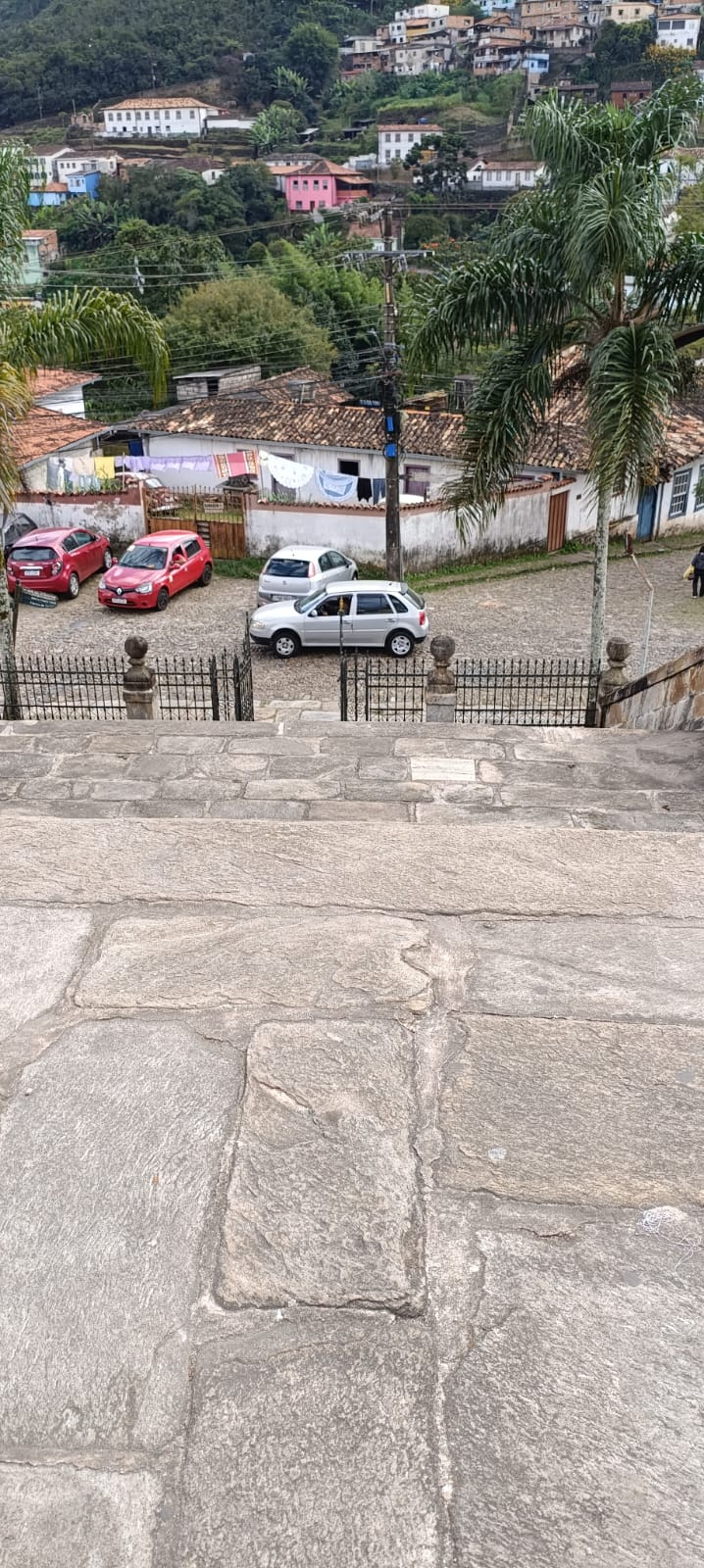
The Illusion of 700 Meters: The Challenge of Walking Through the City Center
We stayed across from the Mirante da Ladeira viewpoint, about 700 meters from the central square. The distance seemed short and strategic to avoid the heavy traffic, steep hills, and lack of parking. We chose to walk, but what should have been a contemplative stroll revealed an important warning about the lack of inclusive urban planning.
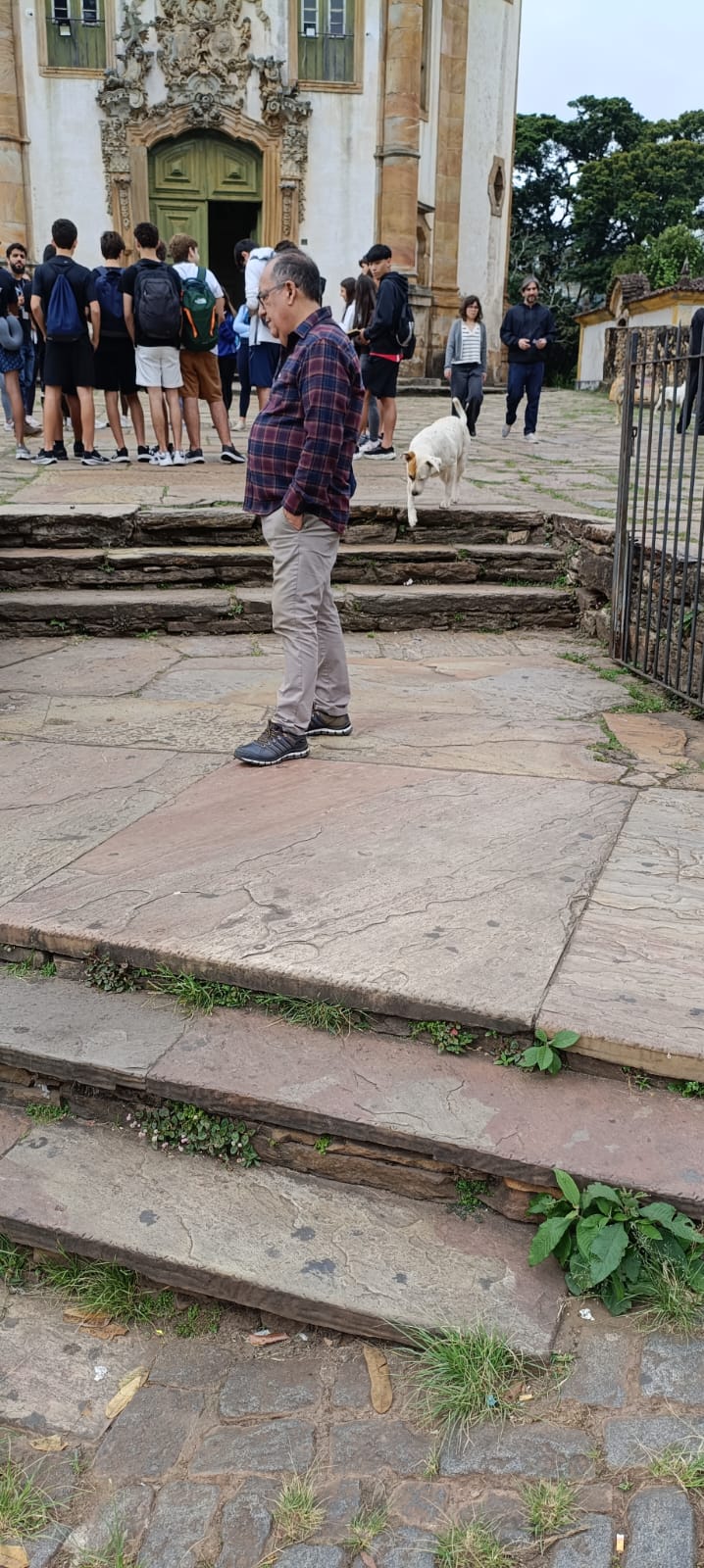
Traffic on the narrow streets of Ouro Preto is already challenging, but the situation for pedestrians is even more worrying. In many sections, sidewalks simply don't exist. Where they do exist, they are so narrow that they barely allow one person to pass, forcing pedestrians to share space with cars. Furthermore, the pavement is uneven and slippery in some places, interrupted by high steps along practically all the paths.
If the route required constant attention and considerable physical effort for us, the elderly, for people with reduced mobility it can become practically impassable.
Accessibility and Inclusion Assessment in Monuments
During the four days of visiting museums, churches, and historical monuments, the perception was clear: inclusion is still very far from being a local reality.
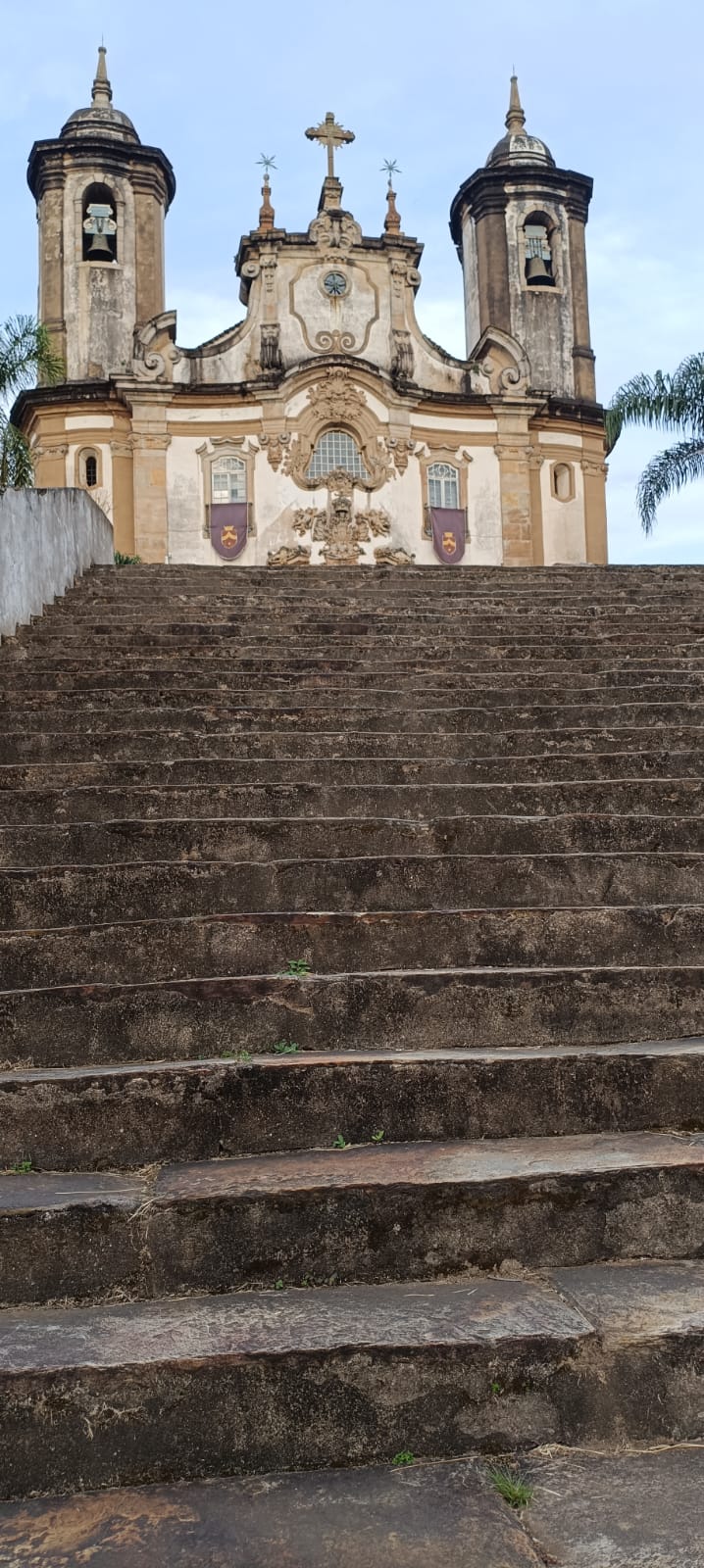
Throughout the entire circuit visited, only one church had an access ramp. In the other spaces, the traditional staircases remain difficult barriers for many people to overcome.
Sensory accessibility is also limited. Basic resources for autonomy for visually impaired people, such as Braille signage, were found in very few places.
The only aspect that was fully respected throughout the trip was the right to half-price admission for senior citizens, granted without difficulty at all the tourist attractions visited.
Autism, Safety, and Dysregulation
When discussing accessibility, it's important to remember that inclusion involves more than just physical barriers.
For families of autistic individuals who exhibit avoidance behavior, Ouro Preto can represent a significant risk. The streets are narrow, the traffic is heavy, and in many places, there is no safe separation between pedestrians and vehicles.
Another challenge is that many sidewalks are so narrow that they don't allow walking side-by-side. For those who need to offer constant support or walk hand-in-hand for safety, this becomes an additional difficulty.
Added to this are the slopes, the uneven pavement, and the constant noise of traffic, creating an environment that can promote physical fatigue and sensory overload.
Conclusion
Ouro Preto preserves a valuable part of Brazil's history, but it still fails to allow this history to be experienced in an accessible way by everyone.
Ensuring discounts and legal benefits is important, but inclusion goes far beyond that. Preserving historical heritage is fundamental, but democratizing access to it should also be a priority.
We love the historical experience the city offers. We just wish it could be enjoyed with more safety, comfort, and autonomy by everyone.
Submitted by: Vivian Machado — Novo Hamburgo/RS
🌿 Inhotim Institute – Brumadinho, MG
Recognized as the largest open-air museum in the world, the Inhotim Institute impresses with its combination of contemporary art and nature. However, during our visit, we encountered significant challenges related to accessibility, wayfinding, internal transportation, and visitor support, especially for the elderly, people with disabilities, and families with disabilities.
The Challenges Encountered
The park is vast and has a very uneven topography, with many ascents and descents. Despite this, the maps provided are simplified and make navigation difficult. Even as education professionals accustomed to reading maps, we had difficulty finding some routes.
The signage also left much to be desired. Although there are signs indicating galleries, we felt the lack of clearer directions for restrooms, snack bars, and restaurants. On several occasions, the visual communication generated more questions than answers.
The internal transportation system was another critical point. The electric carts follow fixed routes and do not make intermediate stops, even when an important gallery is along the way. This forces visitors to walk long distances, often on sloping terrain. Even when using special transportation, the same limitations remained.
We also encountered difficulties locating food outlets. The options are few, far apart, and expensive. The lack of support points with water and quick snacks increases physical strain, especially for the elderly, children, and autistic individuals.
Although the entrance staff were friendly and the priority service worked, we noticed a lack of preparedness in some areas of the park. At one point, when we asked where the nearest place to eat was, the attendant was unable to give us proper directions.
Another aspect observed was the lack of clear signage regarding priority service in the shopping malls. In several lines, elderly people, people with disabilities, or families with atypical needs had to request their rights individually, generating unnecessary discomfort and stress.
Our Experience
The intense heat, the long distances, and the obstacles encountered severely limited the visit. In approximately three hours, we were only able to see three galleries.
Given the current situation, we do not recommend visits for seniors with mobility restrictions, people with physical disabilities, or atypical families with autistic members, unless significant structural improvements are made.
Suggestions for Improvement
Among the improvements that could make the park more inclusive are: expanding signage, creating specific accessibility maps, implementing intermediate stops for electric carts, exclusive accessible routes for priority people, better identification of priority lines, continuous training of staff, and installing more food and hydration points along the route.
Inhotim's potential is extraordinary. With a few adaptations, the space could offer a much more comfortable, safe, and inclusive experience for all visitors.
```Submitted by: Vivian Machado — Novo Hamburgo/RS
Share your experience 💌
Your story can inspire other families and encourage places to become more accessible.
Don't miss any tips!
Sign up and receive our inclusive tourism experiences directly to your email.
Want to make tourism more inclusive?
We are open to partnerships with accessible spaces, inclusive inns and projects that value diversity.
Get in touch and let's talk!

Excellent post. I was constantly checking this blog
and I am impressed! Very useful info specifically the last part 🙂 I care for such information a lot.
I was looking for this certain info for a long time.
Thank you and best of luck.