
Inclusive Service in Tourism ♿✨
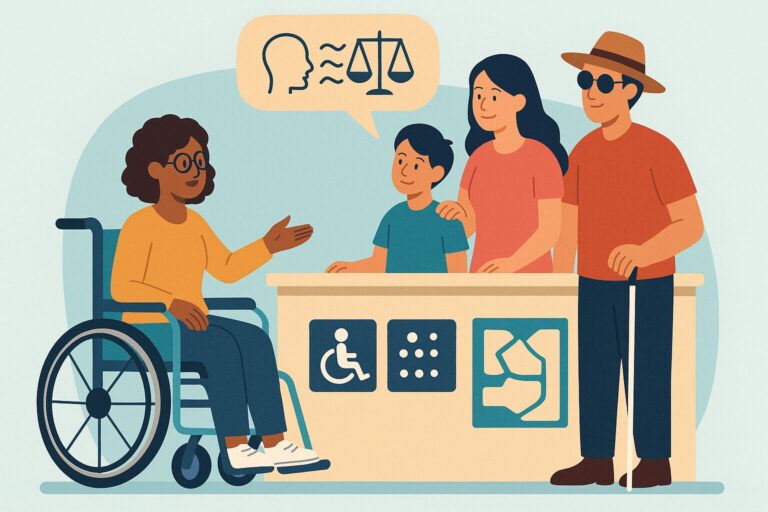
Truly accessible tourism begins with a simple yet powerful action: serve everyone wellThis means more than just being polite or smiling — it's about creating experiences that respect differences, welcome each visitor, and eliminate barriers, whether physical, sensory, cognitive, or communicational.

What is inclusive service in tourism?
Inclusive care means ensuring that all people They should have full access to the tourist experience — from the first contact to the post-visit. This includes people with disabilities, neurodivergent people (such as autistic people), the elderly, pregnant women, families with young children, and anyone who can benefit from a more welcoming and predictable environment.
In practice, this involves respect different rhythms, Use clear language., anticipate information ...and offer support in a kind and non-infantile way. The tourism experience should be lived with autonomy and dignity — and customer service is the gateway to making that happen.
Why invest in inclusive care? 🌍
- It builds trust. Visitors feel welcome and are more likely to return.
- Strengthens reputation Inclusive places receive more recommendations.
- It expands the audience. — diverse families, groups and communities are beginning to see the destination as accessible.
- Reduces incidents Anticipating and adapting prevents discomfort, sensory crises, and operational problems.
- It aligns with the legislation. Inclusion is not just a distinguishing factor, it is a right enshrined in law.
According to the World Tourism Organization (UNWTO), more than 1 billion people in the world have some type of disability. In Brazil, there are more than 45 millionProviding excellent service is not a niche market—it's a real and growing need.
7 fundamental principles of inclusive care 🧭
- Active listening and consent: Ask how the person prefers to be treated, respecting their boundaries.
- Clear and direct language: Avoid jargon and explain each step of the experiment objectively.
- Predictability: Describe in advance any sounds, lights, smells, and movements that may cause discomfort.
- Flexibility: Adapt schedules, routes, and flows to meet different needs.
- Autonomy: Offer resources so the person can decide—don't impose help.
- Privacy and dignity: Avoid discussing personal matters in front of other people.
- Continuous feedback: Listen to suggestions, implement improvements, and communicate those changes.
How to apply these principles in practice ✨
The secret lies in operational detailsInclusive service doesn't have to be expensive or complicated. Many actions have zero cost, but make a huge difference in the visitor experience.
- Explain the tour step by step, including duration, potential queues, and loud noises.
- Offer seats near the exit for those with anxiety or sensory sensitivities.
- Having a quiet break area for those who need to rest or regulate their senses.
- Empower the team to ask simple questions, such as: "Can I explain how it works?" or "Would you prefer that I demonstrate and then you decide?".
Useful phrases that make a difference 👂
- "Can I explain how it works? If anything becomes uncomfortable, we can adjust it."
- "Would you like to see a map of the route with approximate times?"
- "We have a quieter area, would you prefer to use it?"
- "Would you prefer that I show you and then you decide?"
Adaptations by profile ♿🧩
Autism (ASD)
- Make available sensory itineraries with sounds, lights and pause points.
- Please provide information on queue duration and travel time.
- Offer noise-canceling headphones or allow the use of personal devices.
- Send a short video of the preparations with captions or photos of the location.
People with physical disabilities
- Ensure accessible routes, ramps, and clear signage.
- Please provide measurements and inclines, when possible.
- Offer alternative, barrier-free entry points.
Deaf people
- Provide redundant visual information (pictograms, legends, and panels).
- Maintain eye contact and use short sentences.
- Train the team in basic signals (greeting, thanking, attention).
Blind or visually impaired people
- Describe the environment objectively (directions, distances, obstacles).
- Utilize tactile paving, tactile maps, and appropriate contrast in signage.
- Offer support without driving without permission.
Intellectual disability and neurodiversity
- Use short sentences, avoid information overload.
- Give yourself time for answers and decisions.
- Explain with visual examples.
Before, during, and after the visit 🧭
Before
- Please send clear information via email or WhatsApp, including schedules, maps, and waiting times.
- Allow scheduling of alternative times for those who wish to avoid crowds.
- Make sure the website is accessible (alt text, contrast, keyboard navigation).
During
- Conduct a brief explanatory briefing at the beginning of the experience.
- Offer quiet spaces, accessible seating, and visual aids.
- Communicate changes clearly and in advance.
After
- Send out a satisfaction survey with specific questions about accessibility.
- Create channels for continuous feedback.
- Publicly showcase the improvements made based on the feedback received.
Practical checklists for teams ✅
Front desk
- Simple map with an accessible version (QR code or printed).
- Inform the customer of the waiting time and available alternatives.
- Guide phrases to explain the steps.
Team
- Basic training in clear language and sensory attention.
- Discover accessible routes and places to rest.
- Escalation channel for specific needs.
Indicators and impact 📊
Inclusive service can (and should) also be measured. By tracking simple indicators, it's possible to understand where the gaps are and plan continuous improvements.
- Specific NPS for accessibility and welcoming atmosphere.
- Service time with and without adaptation.
- Return rate and positive mentions in reviews.
- Incidents and response time.
Small improvements, such as training staff to explain the route or creating a quiet space, can significantly increase visitor satisfaction and transform the destination's image.
Conclusion 🌟
Accessible tourism is not a luxury, it's a right. By adopting simple inclusive service practices, destinations and businesses demonstrate respect, empathy, and social responsibility—and also strengthen their market position.
More than infrastructure, It's about people.It's about how we look at each other, how we communicate, and how we create pathways so that everyone can have unforgettable experiences.
Want to start today? Contact us to receive a personalized checklist or quick training for your team 👩🏫✨
Talk to us or see the inclusive assessments already published on the website.

Don't miss any tips!
Sign up and receive our inclusive tourism experiences directly to your email.